
Introduction
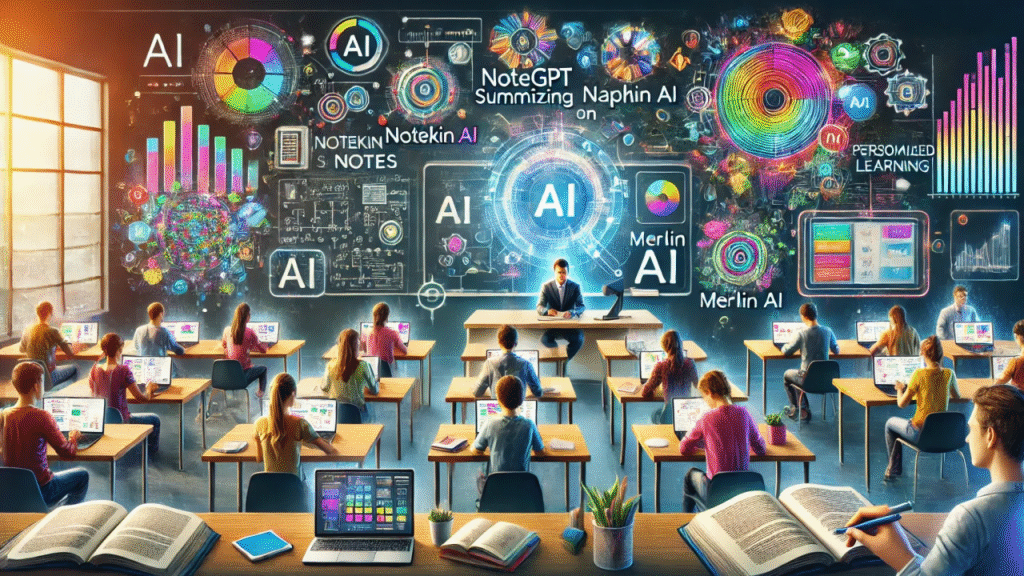
In 2025, artificial intelligence (AI) is no longer a futuristic concept in the education sector—it’s a core driver of innovation and accessibility. The traditional classroom, once defined by chalkboards and standardized textbooks, is being replaced by intelligent, adaptive, and personalized learning ecosystems powered by AI.
Whether in K–12, higher education, or workforce training, AI is revolutionizing how we learn, teach, assess, and grow. This blog explores how AI is reshaping education—from personalized tutoring and automated grading to intelligent course design and global classroom accessibility.
1. Why AI in Education?
🚀 a) Personalized Learning at Scale
AI enables teachers to cater to each student’s pace, level, and style—something previously impossible in traditional settings.
🌍 b) Expanding Global Access
AI tools break down language and accessibility barriers, offering quality education even in remote or underserved regions.
🔁 c) Continuous Feedback Loops
Machine learning algorithms provide instant feedback to both students and educators, creating a real-time performance improvement cycle.
2. Key Areas Where AI Is Transforming Education
🧠 a) Intelligent Tutoring Systems (ITS)
- Platforms like Socratic by Google, Carnegie Learning, and Khanmigo offer AI-based tutoring on-demand.
- They provide hints, explanations, and scaffolded learning paths for subjects like math, science, and coding.
📘 b) Adaptive Learning Platforms
- Tools like DreamBox, Century Tech, and Squirrel AI adjust content difficulty dynamically based on student performance and behavior.
📝 c) Automated Grading & Assessment
- AI can grade multiple-choice, short answers, and even essays with tools like Gradescope or Turnitin’s Revision Assistant.
- Saves teacher time and standardizes grading quality.
🧾 d) AI-Generated Content & Lesson Plans
- Tools like Quizizz, Knewton, and ChatGPT in Education help create quizzes, worksheets, flashcards, and full lesson structures.
3. AI in the Hands of Teachers
AI isn’t replacing teachers—it’s amplifying their effectiveness.
👩🏫 a) Personalized Insights
Educators can track:
- Time spent on concepts
- Most missed questions
- Learning style preferences
This allows teachers to intervene at the right moment.
🗓️ b) Administrative Automation
AI helps automate:
- Attendance
- Report card writing
- Scheduling parent-teacher meetings
📚 c) Professional Development
AI platforms offer on-demand teacher training, tailored to individual skill gaps.
4. AI for Students: Beyond the Classroom
🧩 a) Language Learning with AI
- Duolingo Max and Babbel Live use AI to create conversational simulations and feedback in real time.
🧘 b) AI for Special Education
- Tools like Otter.ai, Seeing AI, and Kurzweil 3000 help students with learning disabilities by converting text to speech, offering real-time captions, and simplifying reading materials.
🎓 c) College & Career Guidance
- AI-powered career platforms like YouScience and PathMatch match students with careers and degree paths based on interests, personality, and aptitude.
5. How AI Is Used in Higher Education
Universities are leading adopters of AI in:
🏫 a) Admissions
- AI analyzes applications beyond scores—considering essays, background, diversity, and behavioral metrics.
🧾 b) Personalized Course Tracks
- Students receive custom academic roadmaps, optimizing for their interests, schedule, and performance trends.
🤖 c) Virtual Teaching Assistants
- Chatbots like Jill Watson (Georgia Tech) respond to student queries instantly, helping professors manage large classes.
6. Benefits of AI-Powered Learning
| Benefit | Impact |
|---|---|
| 📈 Improved Outcomes | Faster concept mastery and better test scores |
| 🧑🎓 Personalized Pace | Slower learners get support; advanced students stay challenged |
| 🌎 Global Access | Education for rural, disabled, or refugee populations |
| 🧘♂️ Reduced Burnout | Teachers focus on human connection, not admin work |
| 🔁 Continuous Feedback | Real-time analytics guide improvement |
7. Popular AI Tools in Education (2025)
| Tool | Function |
|---|---|
| Khanmigo (Khan Academy) | AI tutor for students & assistant for teachers |
| Socratic (Google) | Visual learning assistant with step-by-step guidance |
| Quizlet AI | Flashcards and test prep with AI explanations |
| Otter.ai | Live transcription for lectures and meetings |
| Gradescope | AI-assisted grading & exam analysis |
| ChatGPT Edu | Draft essays, summarize content, and generate quizzes |
8. Real-Life Case Studies
🎓 a) Georgia Tech – Jill Watson
An AI-powered virtual TA that answered student questions 24/7 without revealing it wasn’t human—until students discovered it themselves.
📚 b) India’s DIKSHA Platform
The national e-learning platform uses AI to offer multilingual, personalized lesson recommendations to millions of students.
🌍 c) UNAI (UNESCO AI Initiative)
Uses AI to develop educational apps for refugees and children in conflict zones—teaching language, math, and critical thinking offline.
9. Ethical Concerns and Challenges
Despite its benefits, AI in education comes with challenges:
🔒 a) Data Privacy
Student data must be protected from breaches and misuse. Regulations like FERPA and GDPR are key.
🤖 b) Algorithm Bias
Biased AI can affect grading, admissions, and content recommendations. Transparent AI audits are essential.
💭 c) Over-Reliance on Automation
AI should augment—not replace—human connection in learning.
💰 d) Accessibility Gaps
Low-income schools may lack infrastructure to implement AI, widening the digital divide.
10. The Future of AI in Education (2025–2030)
What’s next?
🧬 a) Emotion-Aware AI
AI tools that detect frustration, confusion, or disengagement via voice and facial cues to better adapt learning methods.
🧠 b) Cognitive Digital Twins
Students will have virtual AI models that simulate how they learn best—used for curriculum optimization.
🌐 c) Universal Learning Languages
AI will translate and adapt curricula across languages, cultures, and education systems in real time.
🛠️ d) Immersive AI + AR/VR
Imagine:
- Dissecting a virtual frog with real-time guidance
- Exploring ancient Rome with AI narration
- Practicing chemistry in a safe, simulated lab
Conclusion
AI is not here to replace education—it’s here to revolutionize it. In 2025, AI empowers educators to be more effective, helps students learn smarter and faster, and expands access to knowledge for all.
But the heart of education—inspiration, creativity, and connection—still belongs to people. With responsible integration, AI can be the greatest partner education has ever had.